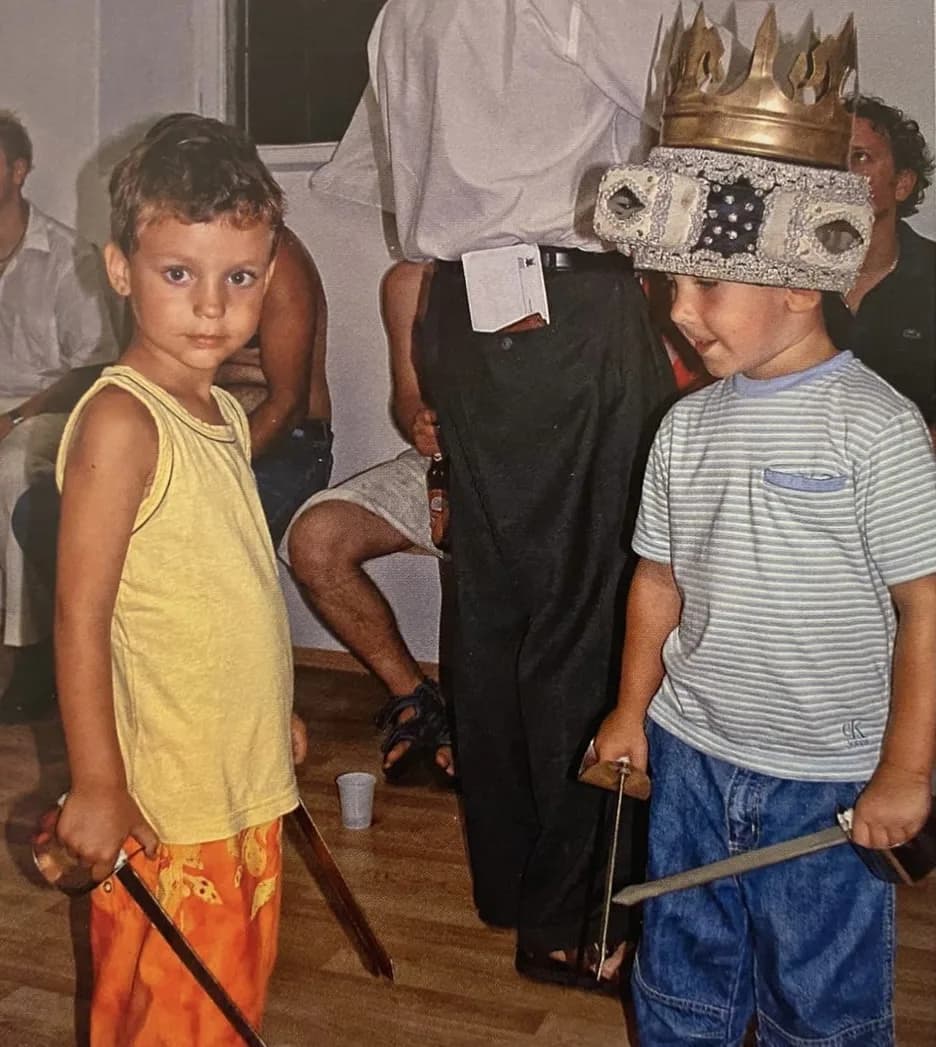
Short answer: yes, and many children love it. The Moreška is a live sword dance with a clear hero-and-villain story, dramatic music and genuinely thrilling combat. For a lot of kids it's the highlight of their trip to Korčula. But there are a few honest things worth knowing before you book, so you can choose the right seats and set expectations. Here's the practical rundown.
What kids actually see
The Moreška tells a story any child can follow even without understanding the words: a young woman, the Bula, has been captured by the Black King, and the White King comes to rescue her. After a tense confrontation, the two armies fight seven escalating sword battles, and good wins. The Bula is freed, the villain surrenders his sword. It's a fairy-tale shape, told with real drama.
The dialogue is spoken in an old Korčulan dialect, so neither you nor your children will catch every word, but the story plays out so vividly in the action that it doesn't matter. Pointing out "that's the hero, that's the king who took her, watch what happens" is usually all the setup a child needs.
The honest part: it's loud, and the swords are real
This is what makes the Moreška special, and it's exactly what to factor in for younger children.
- The swords are real iron. Each dancer carries two blades weighing about a kilogram, and they strike hard enough to throw sparks. The clashing is rhythmic and forceful, bam, bam, bam echoing off the old town's stone walls.
- It's genuinely loud, between the live brass orchestra and the metal-on-metal combat. Most school-age children find this exciting; sound-sensitive toddlers may find it a lot.
- The front rows are immersive. Sitting close puts you right up against the action and real steel. The dancers are highly trained and strike with precision, but for families we'd usually suggest sitting a few rows back, you get the full spectacle with a calmer vantage point and a clear view over the crowd.
None of this is a reason to leave the kids at home. It's a reason to pick your seats deliberately.
What age is best?
There's no official age limit, and Korčula's own children grow up with this dance, boys here begin learning the steps in elementary school, and the troupe has long trained dancers from age 12. As a rough guide for visitors:
- Ages roughly 6 and up tend to be the sweet spot: old enough to follow the story, enjoy the swordplay, and handle the noise.
- Younger children (3–5) can absolutely enjoy it too, especially the music and the spectacle, just sit further back, and be ready to step out if the volume is too much.
- Babies and toddlers: the noise and a roughly hour-long, late-evening start time are the main considerations (see below).
You know your own child best, this is a thrilling live show, not a quiet museum visit.
Timing: it's a late, ~1-hour evening
Performances begin at 21:00. The full evening, opening songs from the klapa and live wind orchestra, the spoken drama, then the seven sword battles, runs roughly an hour. The combat is the climax, so the most exciting part comes toward the end.
For families that means: a later night than usual, with the payoff arriving in the second half. If you have an early-to-bed little one, weigh that up. For most children the late start is part of the adventure, an open-air evening in a floodlit medieval town is a memory in itself.
Tickets, prices and seating tips
- Children under 14 are €10; adults are €20. Groups get every fifth ticket free (a nice saving for extended families travelling together).
- Seating is not numbered, so for families, arriving 20–30 minutes early is the single best tip. It lets you choose seats a few rows back with a clear sightline, rather than taking whatever's left.
- The venue is the open-air Summer Cinema (Ljetno kino) in the old town; give yourself a little extra time to find it.
Want the full picture before you decide? Read our companion guide, What to Expect at a Moreška Performance, and learn more about HGD Sveta Cecilija, the society that has performed this dance since 1883.
The verdict
For curious, school-age children, the Moreška is close to ideal: a real story, real swords, real music, and a 400-year-old tradition unfolding in front of them. For toddlers, it can work beautifully from a few rows back, just go in knowing it's loud and it's late. Choose your seats, set the scene, and let them watch good defeat evil with iron and sparks.