The Story of HGD Sveta Cecilija
Guardians of Korčula's living heritage since 1883
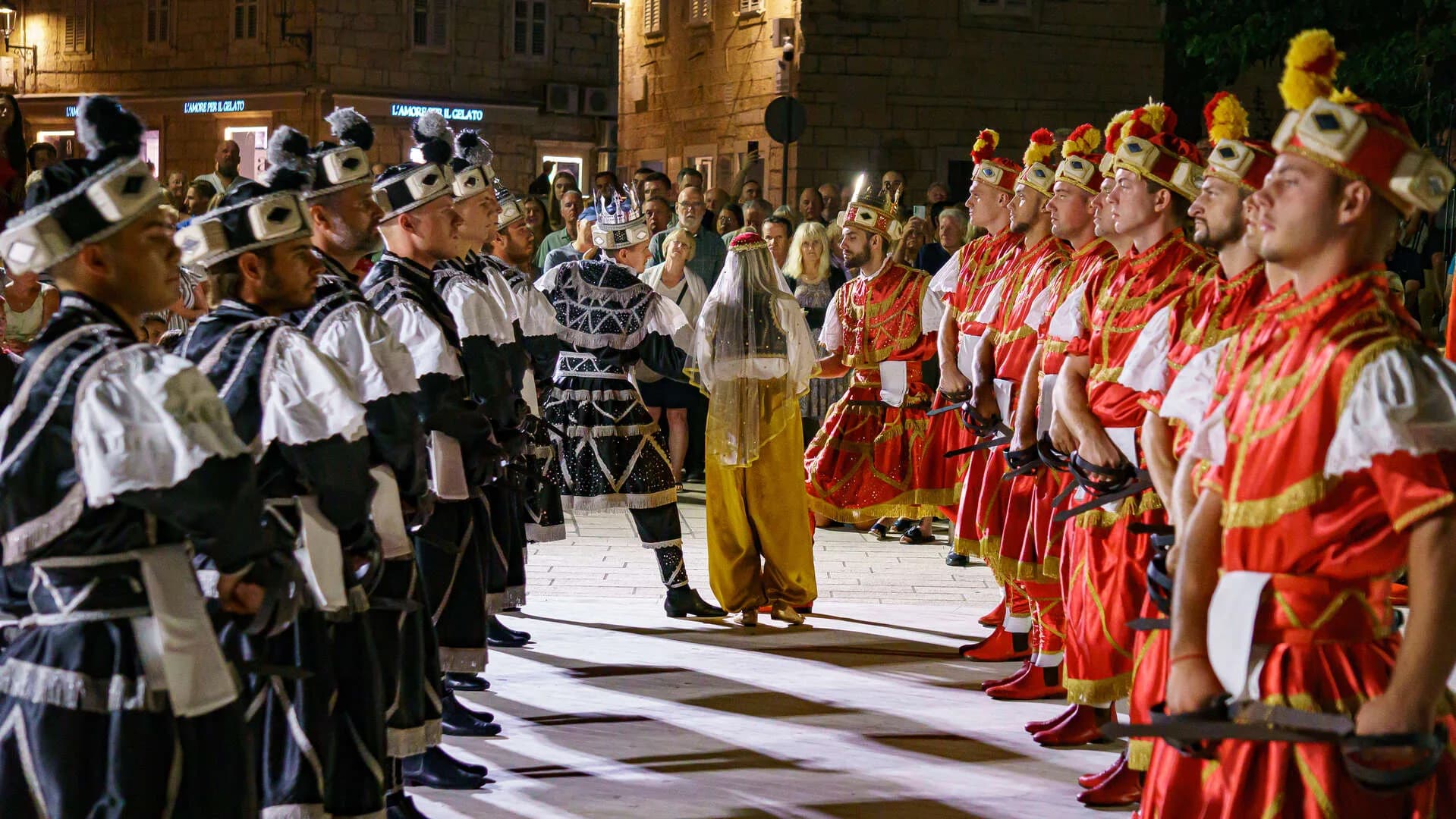
Two kings. One captive maiden. A stolen love, a ritual challenge, and seven battles to decide the fate of honour. This is the Moreška, Europe's last surviving war dance, and the soul of Korčula. For over four centuries, men on this small Dalmatian island have drawn iron swords to re-enact a drama of virtue and force. The Bula, fiancée of the White King Osman, is held by Moro, the Black King who would claim her by force. Her reply cuts through the stone silence: 'Far more pain for me is your unwanted love than the steel.' What follows is the Sfida, the challenge, and then seven escalating figures of double-sword combat that have not changed in centuries.
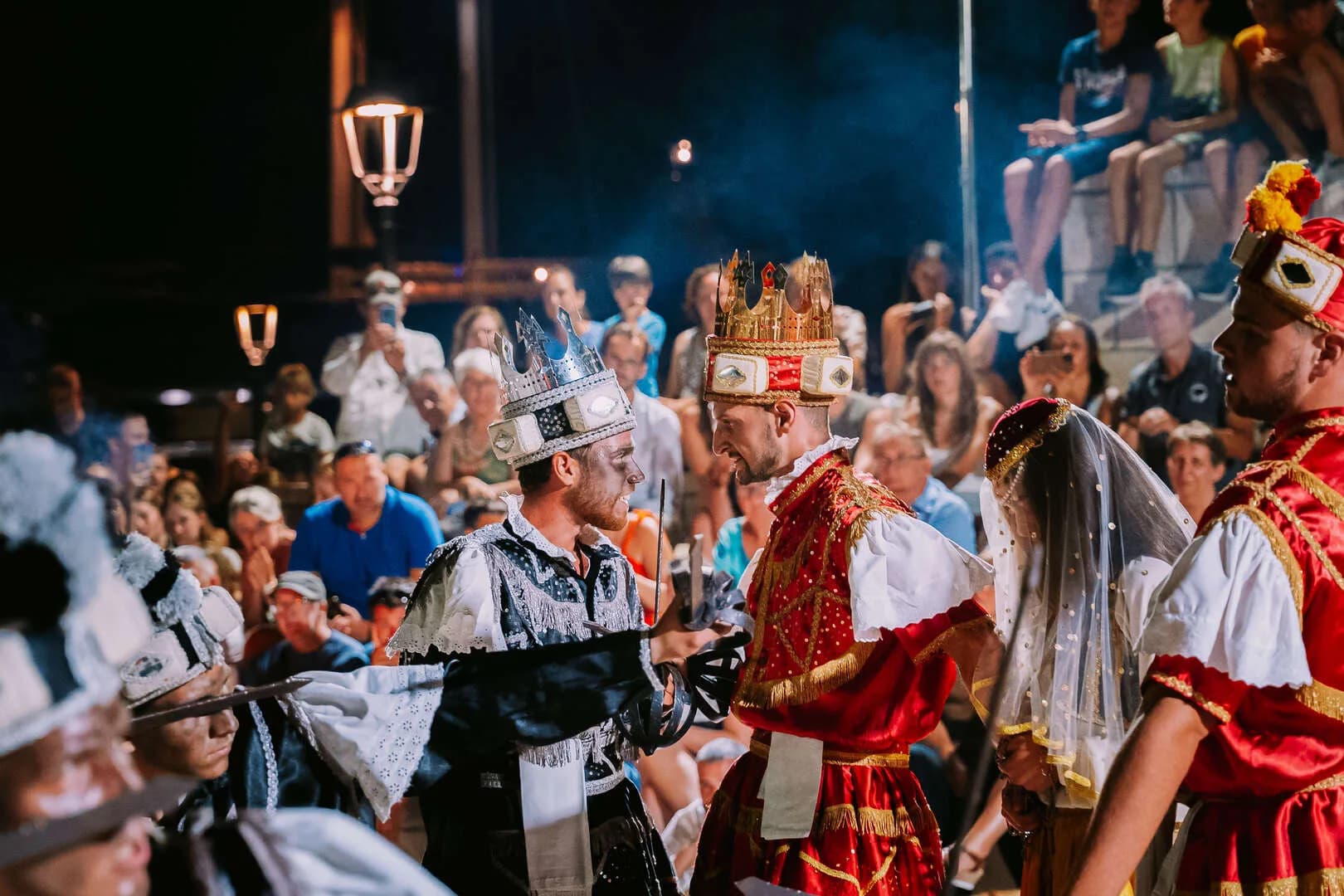
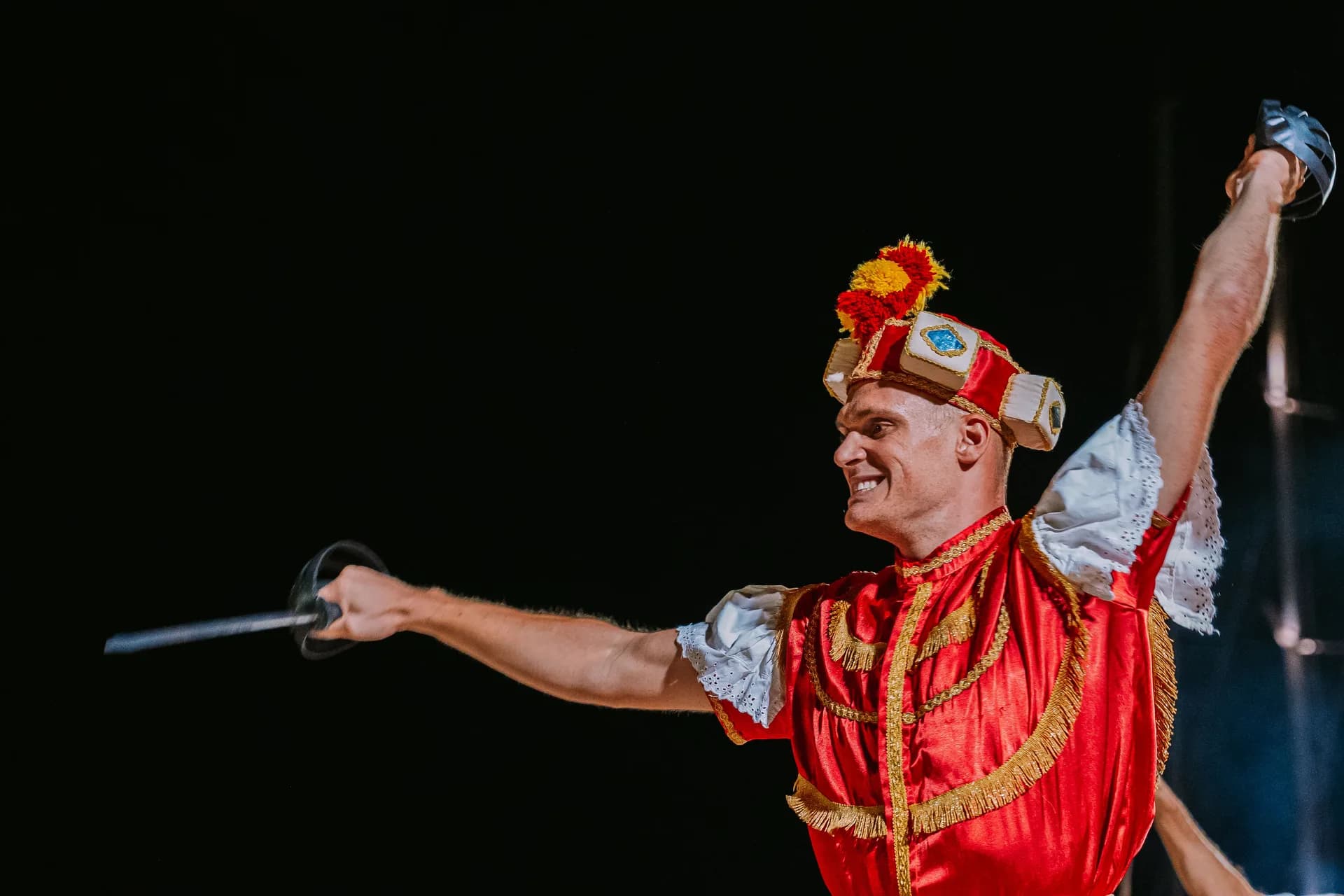
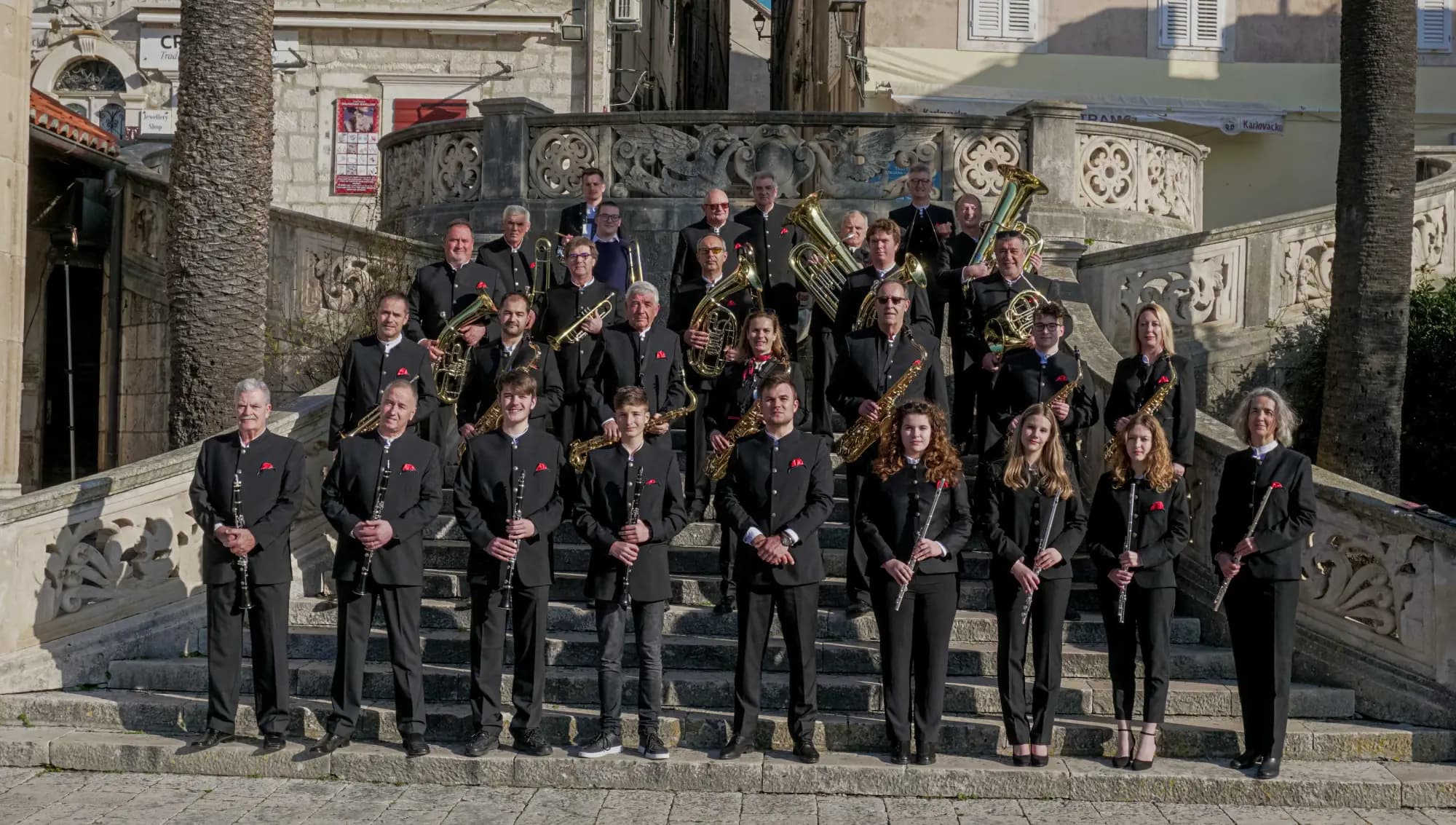
What separates the Moreška from every other folk performance in Europe is the double-sword technique. Each moreškant wields two iron blades: the right hand strikes, the left parries, preserving the martial technique of a 16th-century Adriatic garrison. The swords weigh a kilogram each and strike hard enough to produce sparks. In 1937, Croatian composer Krsto Odak wrote the definitive brass band score that drives every figure: seven movements beginning in lyrical tension and escalating to a furious 4/4 finale as the Black army's circle tightens and yields. The costumes trace to 17th-century Italian court ballet: full pleated skirts, Roman cuffs, sashes. The White army wears red; the Black army wears black. There is nothing like it anywhere in Europe.
In 1883, during the Croatian National Revival, Korčulan citizens founded the Singing Society St. Cecily, today's HGD Sveta Cecilija. Their mission: to ennoble the hearts of local youth, defend the Croatian language, and keep the Moreška alive. What followed was a century and a half of institutional resilience. The society survived the Austro-Hungarian empire and two World Wars. The second destroyed the costumes, the swords, and the scores entirely. As the island was liberated in 1944, town barber Ivo Lozica and schoolteacher Božo Jeričević trained a new troop of boys aged 12 to 17 from scratch, sewing costumes from church altar cloth. In 1991, HGD Sveta Cecilija was re-established under its original name following Croatian independence. The dance had survived everything.
In Korčula, there is a saying: 'You are not a man if you cannot dance Moreška.' Boys begin learning the steps in elementary school. Roles like the kings and the Bula are passed from parents to children across generations. The dance is not performed for tourists. Every summer, from May through October, HGD Sveta Cecilija performs 24 times at the open-air Summer Cinema in the old town. The same iron swords. The same archaic Korčulan verse. The same seven battles. Come witness it.
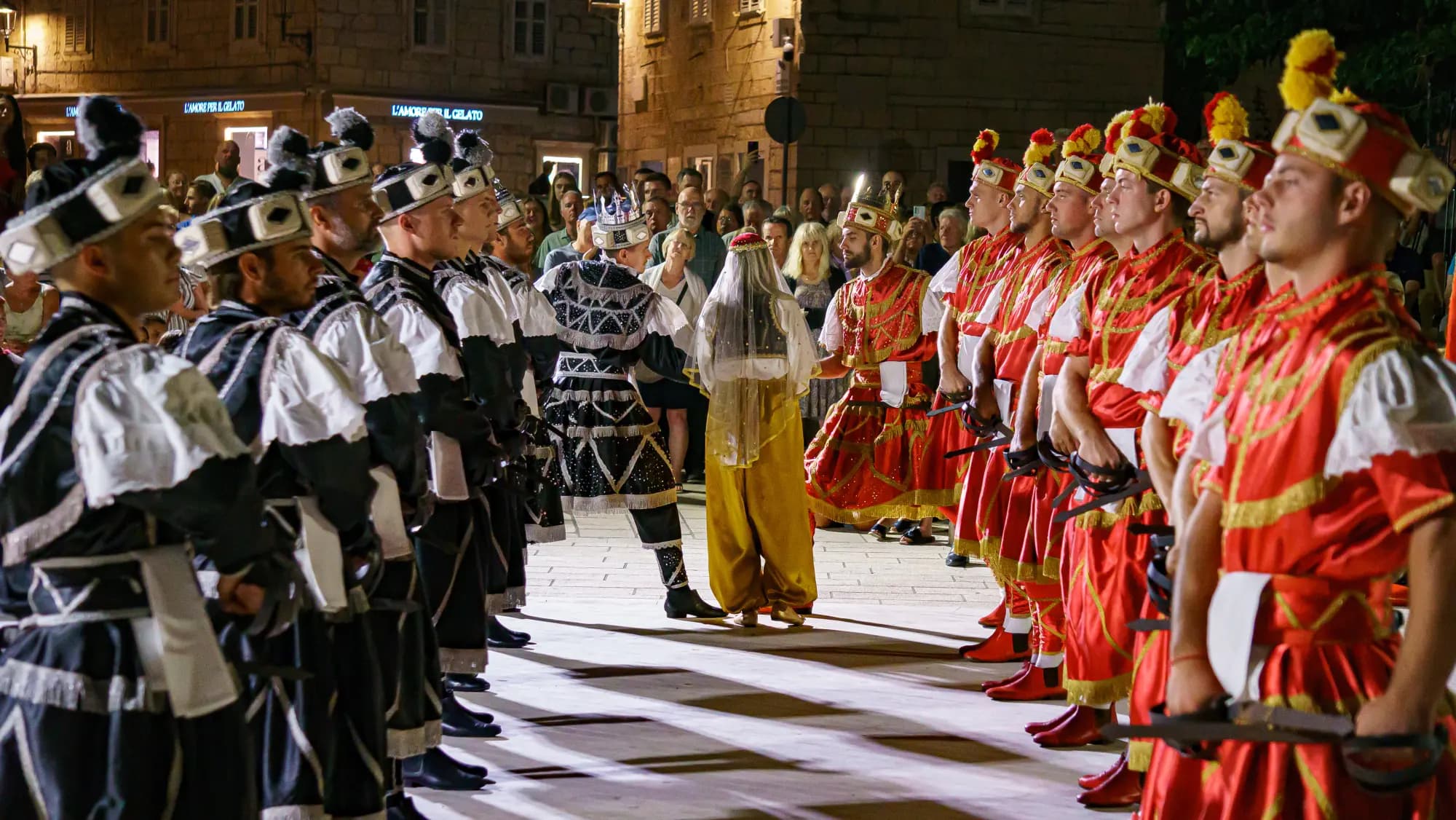
Every summer at the Summer Cinema, Korčula.
Twenty-four performances from May through October. Showtime 21:00.
See the 2026 Schedule